

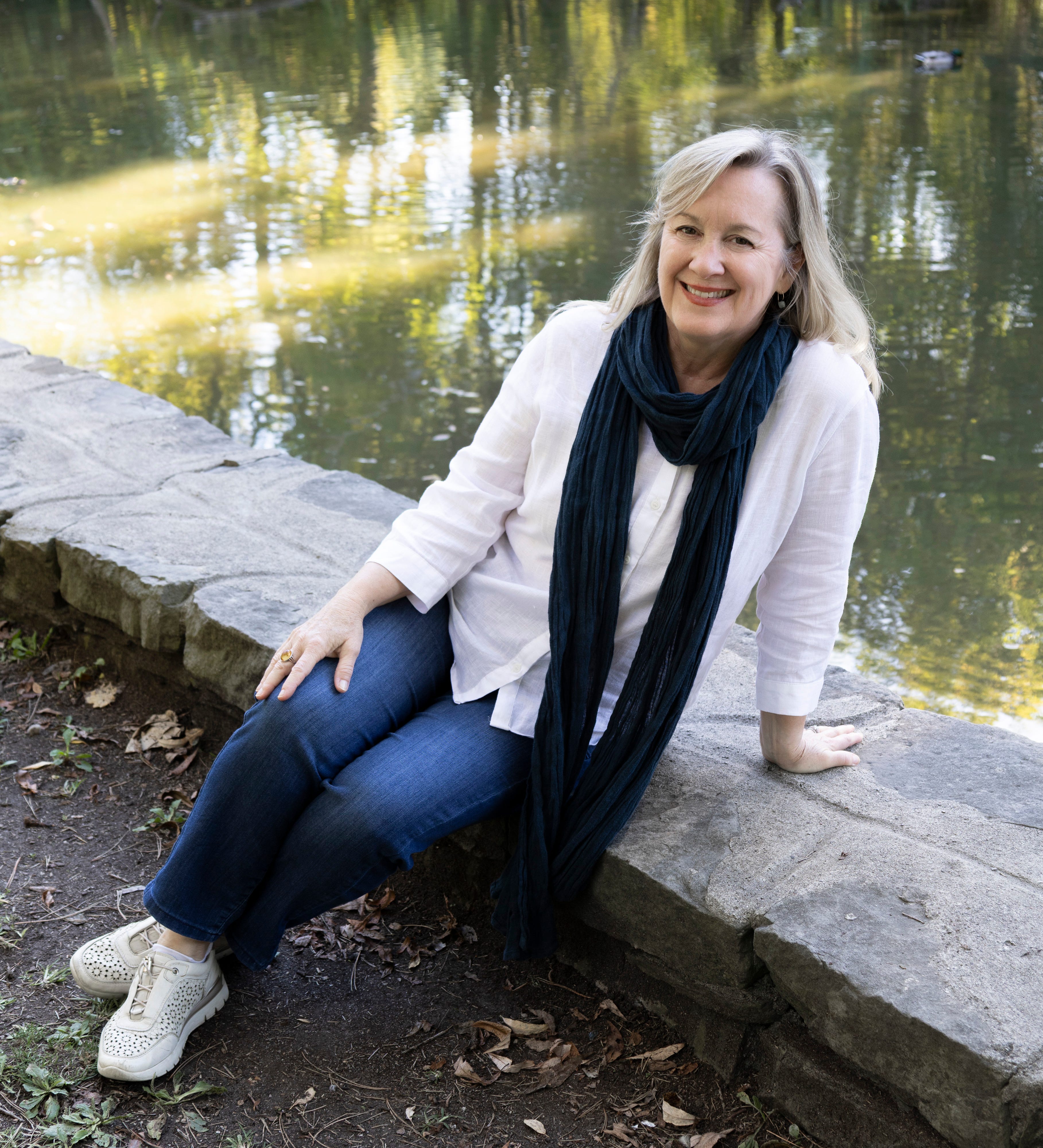
Christine Fischer Guy is a Toronto writer and journalist. She’s a 2024 VCCA fellow and is the author of The Umbrella Mender (Wolsak and Wynn 2014), a “terrifically entertaining read” that “keeps the reader interested partly because she avoids setting up stereotypical opposites.” Her second novel, The Instrument Must Not Matter, is a coming-of-age story about a classical pianist and was published May 12, 2026. She was awarded a National Magazine Award and contributes criticism and interviews to literary journals.
Describe your writing space. What do you love about it?
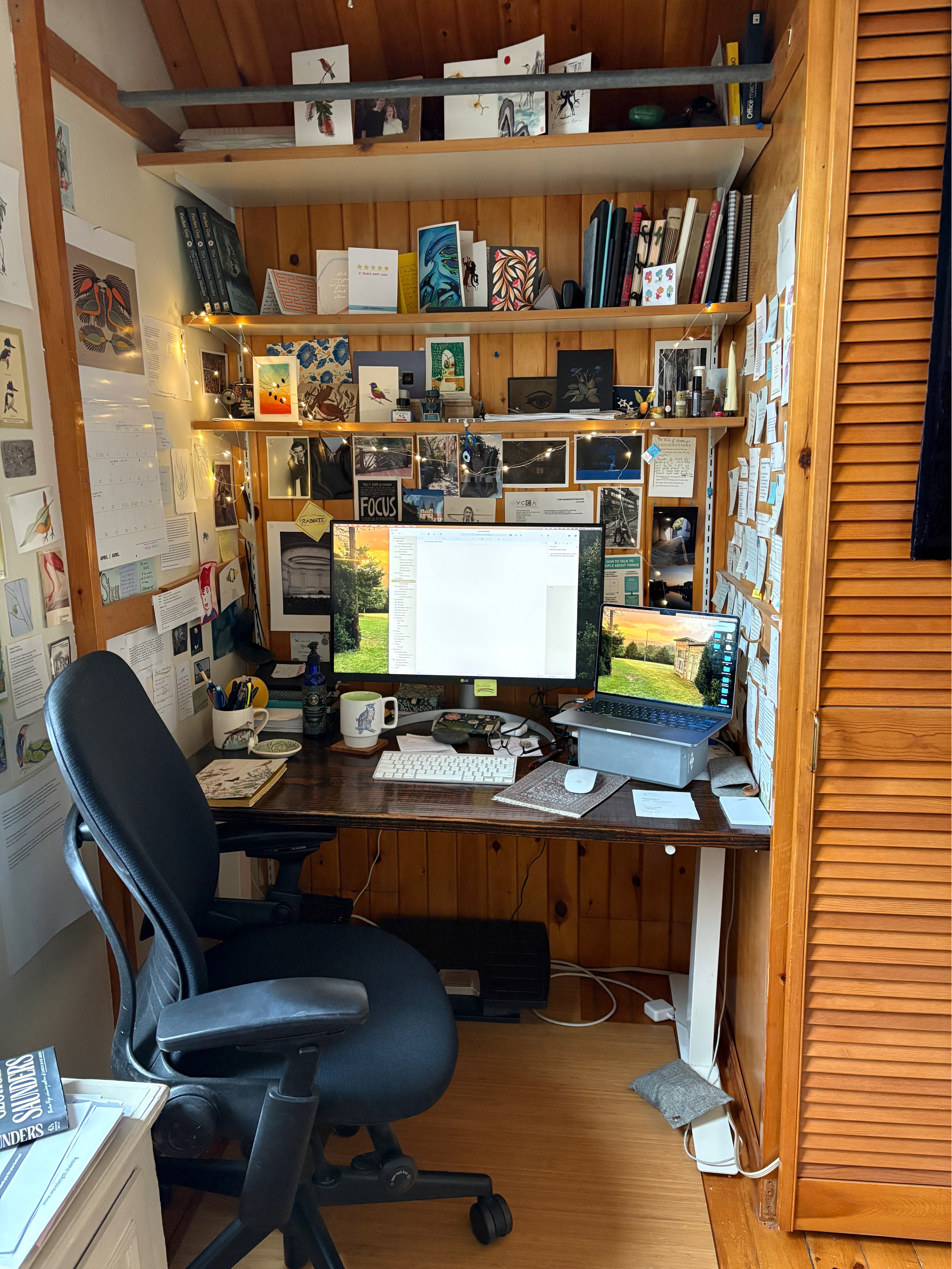
I have two desks in my space, one on the wall with the window, and one in a space that used to be a closet with the window behind me. I write at the closet desk (pictured below) because I’m distractable and I’d get involved with sidewalk dramas if I sat at the other one, which I use for Zoom meetings and for drawing/painting. Without any explicit plan to do so, I’ve filled the windowless walls beside the closet desk with bits of poems and novels I’ve loved, plus photographs/drawings that are visual prompts for the current work. This hug of words and pictures is like a walk beside some of the authors and artists I love most, and it holds me tight while I work. I light a candle if it’s dreary outside or before sunrise.
How important is it to have ‘a room of one’s own’?
I love my writing space because it has a door, and I need one. During the pandemic, it tripled as my Zoom meeting space, my workout/yoga room (for Zoom classes) and my writing space. Because I was spending a lot of time in here, I made sure I had some art I liked to look at on the walls, a decent chair, candles and fairy lights for dreary days and a couple of mini-orchids. Then I was living with three other adults (two adult children at university and my husband) and it became a real retreat for me. It still is.
Paradoxically, I find I can also write well on trains. Something about moving through space is helpful, and I love traveling by train. There the space is mental space, much like when I lived in London, England and commuted to work on a crowded subway train. Then, earphones and a book gave me a room of my own.
Any rules for when you’re in this ‘space’?
This space is for my day job as well, so when I’m writing creatively I close the door, put on soundtracks with various kinds of white noise (almost all music is too distracting), and silence my phone. My family knows that if the door is closed, they have to knock!
What is your writing practice like?
Nothing beats a good pen and paper for a cone of silence, but I also compose on a keyboard. For first drafts, straight from bed is best so I’m close to that dreaming space where stories live. I have to ignore my galloping desire for a morning walk, because protecting my body from vehicular traffic in a big city sends the creative brain into the back seat. Coffee is important.
Do you quantify your process by word count or hours spent writing?
That depends on the stage I’m at. If I’m at first-draft stage, I set word-count goals, 1000 words of a new draft if I have a solid 4-5 hours to work (shorter if I have less time). These help keep me in the chair when I’m stalled, because there’s always something to get up for. Of course sometimes I do need to get up and stretch, which can mysteriously clear blocks. The trick is knowing which is which! Once I’m editing, I use time and page goals.
What is the easiest and most difficult part of the process for you?
I wouldn’t say any part of the process was easy. If it was, it wouldn’t be worth doing. The feeling of having wrestled an idea to abstract symbols on the page feels satisfying eventually, when I’ve found something approximating that perfect idea that exists beyond words. The difficult part is recognizing that something I’m writing isn’t working and I need to start fresh. That happened with a draft of The Instrument Must Not Matter years into the project, and I needed to burn the manuscript in order to let it go. I think I came across Toni Morrison’s advice at exactly the right time. “Failure is just information” is solid counsel for any writer.
Why do you write? What do you love about writing?
Writing is just about the only thing I do that doesn’t make me wish I was doing something else. When the right words show up, it’s a white-hot creative thrill that I don’t find anywhere else. I love the mystery of the creative process, too. My job is to show up, consistently, and the ideas will arrive.
Writing has also reliably been the way for me to find my people, nerds like me who cultivate the moment when the right words come and care deeply about making stories. I don’t think I’d have had a chance of meeting most of the fascinating people I’ve met on the research trail, either, which has enriched my life beyond measure.
How do you manage writing with other demands on your time?
I’m an excellent juggler? I’m a pro task-switcher? I have a doppleganger who does things for me?
I wish any of the above were true! Very occasionally I have the chance to retreat with my writing and shut out my other obligations and responsibilities, but mostly I struggle to find balance. For me, only two things work: scheduling the work time and making sacrifices. It only gets done if I commit to it in those ways.
What has influenced you most as a writer?
I’ve been thinking about the question of “why writing?” a lot lately, now that my kids are grown and visual artmaking makes its way back into my life. When I was in high school, art class was a haven for me and I won the art award in my graduating class. Drawing/painting/photography still feed my creative process—they never were really gone, but I did come to a fork in the road, chose writing, and visual art had to take a back seat for a couple of decades so I could dedicate myself to learning to paint with words.
I think the original locus of influence was William Butler Yeats’s “The Second Coming” when I was a 19-year-old undergraduate student. I don’t come from a bookish home, so until that day I loved reading but didn’t fully understand the power of language. A visiting professor read the poem aloud to us. I remember the sound of it still. It was my first poetry reading, he read it properly, with the silences in the right places. Yeats had me at falcon.
Do you want each book to stand on its own, or are you trying to build a body of work with connections between each book?
Over time, I’ve become aware that only a few central questions drive my writing, so you could describe that as a body of work. The settings and stories change, and the way I’m pursuing those questions changes, but all of my work circles around them.
Best advice you’ve ever been given.
I wish I could remember where I saw this and give credit where it’s due, but “How would you work if success was guaranteed?” stopped me in my tracks. It’s a question that lays bare one’s responsibility to the task at hand. When I made that mind shift, making art became a question of dedication. Would I work differently if success was guaranteed? Why wasn’t I working that way now?
We can’t control how our work will be received, but we owe it the full force of our dedication.
What does success look like to you?
When my stories find their final form and their readers, that’s success. Everything else is out of my control.
Tell us a few things that would surprise us to learn about you: the person, the writer.
I’ve sat on the bottom of the Caribbean Sea after dark during a night scuba dive
I had summer jobs in in a meat packing factory, in the factory and in the office (ask me about eyeballs sent upstairs in pneumatic tubes with tickets from the kill floor, which the guys thought was hilarious)
I sang backup for a track on a friend’s album (“Inbetweening” by The Lightning Struck)
I learned the basics of how to read a lung x-ray for TB from an infectious disease
specialist for my first novel
I’ve successfully called a Cooper’s hawk to the glove in a Falconry 101 workshop (I want the hawk, just need the 5 acres to fly it)
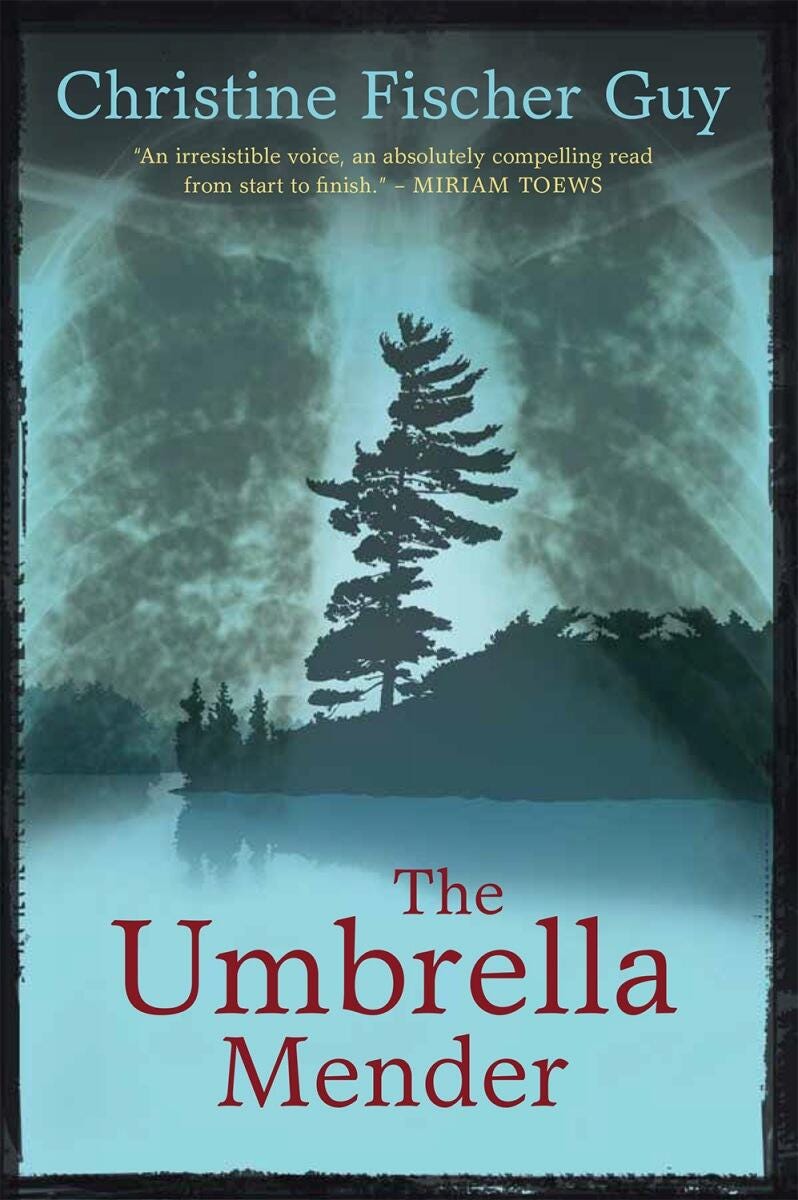
I rode the Polar Bear Express to get to Moose Factory on a research trip for my first novel, The Umbrella Mender
What can books teach us? How do they change us?
A good book drops me off at a different place than it picked me up, and that’s what keeps me coming back. A good novel or memoir or nonfiction can shift my perspective in a powerful and permanent way by showing me something I’ve never seen before, from a different angle or through a different prism. Beautiful prose cracks me open and acquaints me with beauty.
What was a transformative book for you in your life?
Many books have been transformative to me personally and as a writer, in large and small ways.
It would be hard to pin down just one!
What books are you currently loving?
I read and loved Denis Johnson’s Train Dreams after seeing the beautiful film made of it. The film is an homage to a gorgeous novella about one of the last of a breed of American railroad labourers, living in isolation. Even with considerable filmmaking prowess, the novella still wins for its spare, lyrical prose, depth of empathy, and uncommon wisdom.
Vigil also held me captive recently, for George Saunders’s trademark wit and for its deeply existential central question. Saunders is a practicing Buddhist, and this story of Jill “Doll” Blaine’s struggle for equanimity in her own bardo (after sudden death) seems an examination of the challenges of living a Buddhist philosophy in America. Jill’s charge is a character everyone wants to hate, an oil baron on his deathbed, whom Jill must learn to comfort, not judge. We aren’t rooting for that guy, but Jill’s spiritual salvation depends on the successful completion of her task, not on the baron’s just punishment for his vile deeds. It’s a puzzle of a book for anyone approaching the question of justice from a Judeo-Christian framework, and I’m still chewing on it.
If you were a bookseller what 5 books would you hand-sell to readers and why?
Intermezzo by Sally Rooney, which I couldn’t put down and you won’t be able to, either. Two brothers try to make peace after the death of their father. The one considered the fuckup neatly reverses roles with the other as we learn more about the other “successful” one. Read-under-the-covers situation.
Piranesi by Susanna Clarke, because of her ability to weave a strange world that is also at once familiar, an uncanny zone that allows us to detach mental illness from a narrow context and see it with greater clarity.
North Woods by Daniel Mason, because it features real (!) ghosts, and because the POV is a piece of land in New England. We see generations of people moving across it, which is such a fresh way to talk about history, and it teems with life.
Bear by Julia Philips. This story is built on Snow White and Rose Red, with sisters Elena and Sam as the two sisters, and for a long time I thought that she was adding characterization, with class as an additional factor, to the fairy tale. Elena becomes increasingly enchanted by a bear to the point of seeking it on her walks home from work. For me, the bear is more than just a bear, and the book becomes an extended metaphor for anything hidden that comes between two people who care for each other.
The Exclusion Zone by Alexis von Konigslow. This atmospheric novel has the adrenaline of a thriller and the measured probing of scientific study, and this sly tension kept me reading long into the night. For reasons mostly unknown even to Renya herself, our main character joins a team of scientists evaluating the fallout of the Chernobyl disaster on the ground, where radioactivity is expected to endure for hundreds of years, a group of extremophiles chasing life’s biggest questions.
What advice do you have for writers?
Read. As much as you can. Read widely, read things you like and dislike in your own genre and outside of it. The writing brain is always listening.
Thank you Christine.
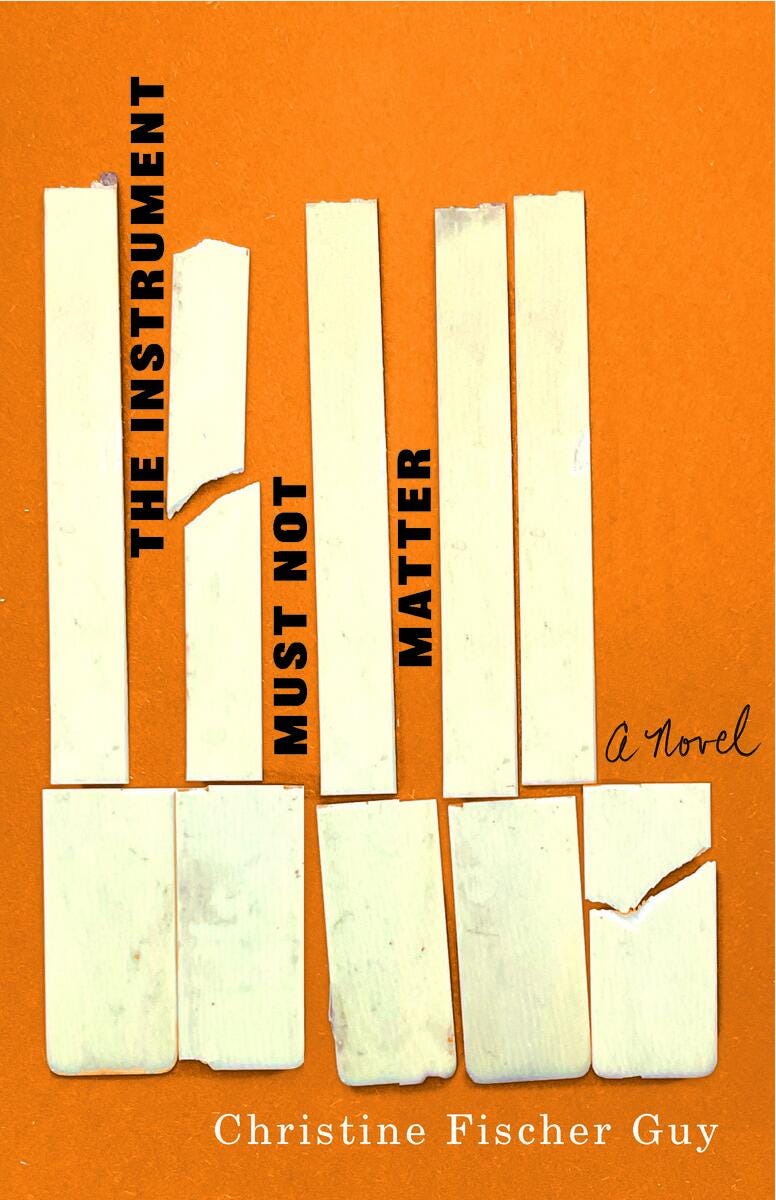
The Instrument Must Not Matter by Christine Fischer Guy, was published May 12, 2026, Wolsak and Wynn Publishers
“Music moves through this beautiful novel. Author Christine Fischer Guy shows us inside the life of a talented young woman, Lila Rys, who is able to see music as colour and texture. This is the extraordinary story of how she learns to connect with her gift, her love and her family legacy.”
-Claire Cameron, author of How to Survive a Bear Attack and The Last Neanderthal
She sees the score for the Bach-Brahms in her mind’s eye, hears the indigo notes unfurl.
In this sweeping coming-of-age novel gifted young classical pianist Lila Rys finds herself in New York City studying under famed teacher George Vrubel. The move from Toronto to the American city is terrifying, but Lila is determined to bring music back to the Rys family, where the story of her grandmother refusing to play Soviet music after their tanks rolled into Prague in 1968 is family lore. Accompanied by her brother, Lucas, who is studying at NYU, Lila struggles to navigate the classical musical world and become the successful performer she’s expected to be. But in New York she has a romantic encounter with a renegade pianist and everything she knows about herself is turned upside down, until her brother discovers dissident literature that holds the stories her grandmother had not passed on, and Lila learns how to set her love for her family, and her music, free.

Fairy lights! What a fabulous idea for an addition to my work space.